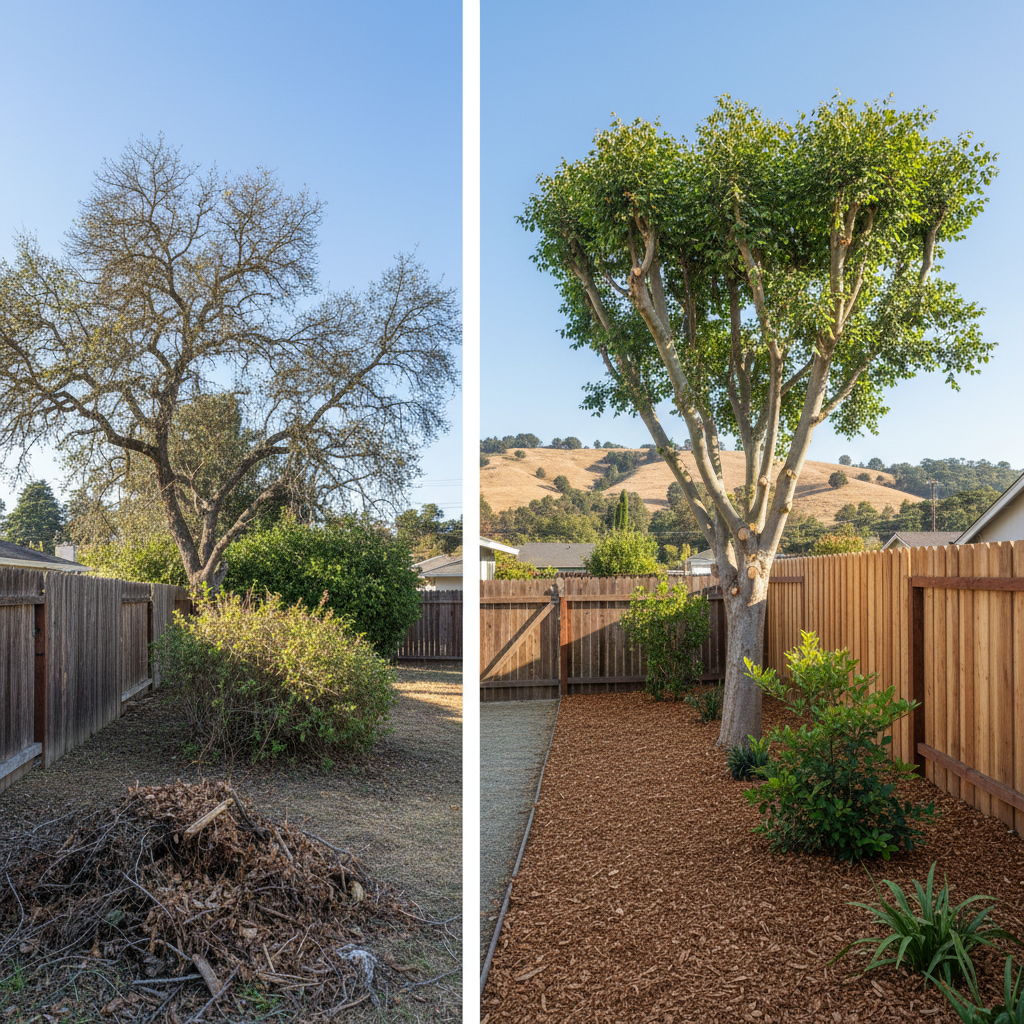
You've got trees on your property, and sooner or later, you're gonna need to prune 'em. Maybe they're getting too big, hitting the house, or just looking a little wild. When you're looking for someone to do the work, you'll hear about different ways to cut trees. Two common approaches often get mixed up, but they're worlds apart: what we call 'topping' and what I call 'proper structural pruning'. Let's break down why one is usually a bad idea, and the other is what your trees really need.
What's 'Topping' Anyway?
Topping is when someone cuts back a tree's main branches and stems to stubs, often leaving just a few feet of trunk or major limbs. It's usually done to reduce the tree's height quickly or to make it 'smaller.' You see it a lot, especially with fast-growing trees like some of the liquidambars or sycamores we have all over Oakland, from the flatlands to the hills. People think they're doing the right thing, trying to control the size.
The Downside of Topping:
Ugly & Weak Regrowth: When you top a tree, it responds by sending out a bunch of weak, fast-growing shoots right below the cuts. These shoots are barely attached to the main limb. They're like a bunch of straws sticking out, not strong, well-anchored branches. They'll grow back fast, often making the tree look even bigger and denser than before, but in an unnatural, club-like way.
Increased Hazard: Because those new shoots are so weakly attached, they're much more likely to break off in a strong wind or storm. And here in Oakland, especially with our occasional winter gales coming off the Bay, that's a real safety concern. Falling limbs can damage your house, car, or worse, hurt someone.
Stress & Disease: Topping puts immense stress on a tree. It removes a huge percentage of its leaf-producing capacity, which is how it makes food. This stress makes the tree vulnerable to insect infestations and diseases. It's like taking away most of its ability to fight back.
Costly in the Long Run: While it might seem cheaper upfront because it's a quick, rough cut, you'll likely pay more down the road. You'll either need more frequent topping to manage the unruly regrowth, or eventually, you'll have to pay for costly removal because the tree got too sick or dangerous.
Shortened Lifespan: All that stress and vulnerability means a topped tree generally won't live as long as a properly pruned one.
What is Proper Structural Pruning?
Proper structural pruning, also known as crown thinning, cleaning, or reduction (when done correctly), is all about understanding how a tree grows and making cuts that promote its health, safety, and natural form. This is the kind of work we do at Oakland Tree Service.
The Benefits of Proper Pruning:
Healthier Trees: We remove dead, diseased, or crossing branches. This improves air circulation, reduces disease risk, and directs the tree's energy to healthy growth. It's like giving your tree a good workout and a healthy diet.
Stronger Structure: We make cuts at specific points to encourage strong branch attachments and a balanced canopy. This creates a tree that's more resilient to wind and less likely to drop limbs.
Improved Appearance: A properly pruned tree maintains its natural shape and beauty. It looks balanced and healthy, not like it got a bad haircut.
Controlled Growth: If a tree needs to be reduced in size, we do it by making cuts back to a lateral branch that's at least one-third the diameter of the removed branch. This is called 'reduction pruning' and it directs growth more naturally and sustainably, without the weak regrowth of topping.
Long-Term Value: While proper pruning might seem a little more involved upfront, it saves you money in the long run. You'll have a healthier, safer tree that needs less frequent, less drastic intervention.
Better Light & Views: By thinning the canopy strategically, we can improve light penetration to your yard or home and open up views without butchering the tree.
My Recommendation for Oakland Homeowners
Look, I get it. You want your trees to look good and be safe. My strong recommendation, based on years of working with trees right here in Oakland's varied climate and soil conditions, is always to go with proper structural pruning. It's an investment in the long-term health and safety of your property.
Don't let someone talk you into topping your trees. If a company suggests it as their primary method, that's a big red flag. A good arborist understands tree biology and will explain *why* they're making certain cuts. They'll focus on the tree's health and structural integrity, not just chopping it down to size.
If you're unsure about what your trees need, give us a call. We're happy to come out, take a look, and give you an honest assessment of the best way to care for your trees.