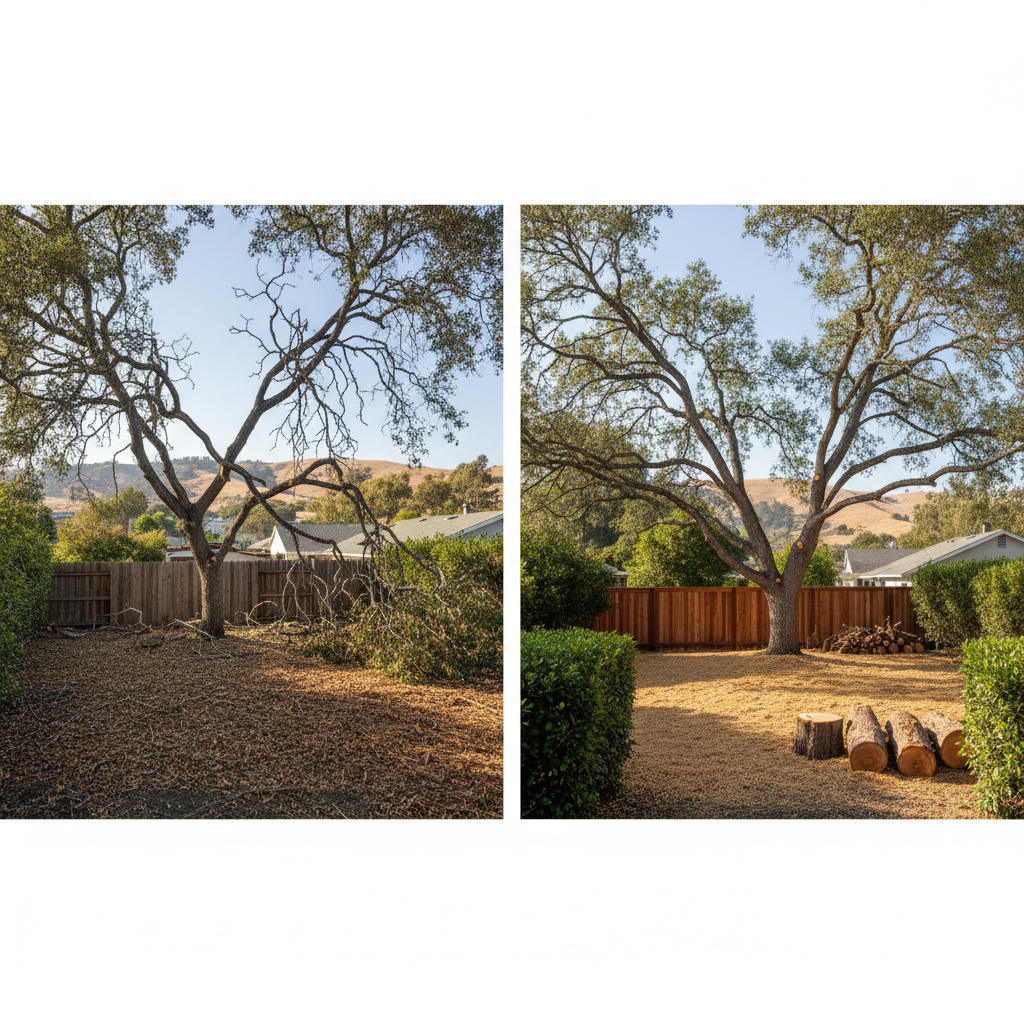
You've got trees on your property, and that's great. They add value, shade, and beauty. But like anything else, they need care. When it comes to pruning, there are a couple of main approaches we often talk about: crown reduction and crown thinning. Folks sometimes get 'em mixed up, or they don't really know which one's right for their situation. Let's clear that up.
What's Crown Thinning?
Think of crown thinning as giving your tree a good haircut, but not too short. What we're doing here is selectively removing smaller branches from the tree's crown. The goal isn't to make the tree smaller, but to improve its structure, increase light penetration, and allow better air circulation through the canopy. We're taking out weak, dead, or crossing branches – the ones that are causing problems or will cause problems down the road. It's a pretty subtle change, usually, but it makes a big difference for the tree's health.
- Cost: Generally less expensive than crown reduction because it's less intensive work.
- Durability: Enhances the tree's natural strength by removing weak points, making it more resilient to wind and storms.
- Maintenance: Often reduces the need for frequent pruning down the line as it promotes healthier growth patterns.
- Appearance: Maintains the tree's natural shape and size, just makes it look tidier and healthier.
What's Crown Reduction?
Now, crown reduction is a different beast. This is when we're actually reducing the overall size of the tree's crown. We're cutting back larger branches to a suitable lateral branch that can take over as the leader. The idea is to make the tree smaller, either because it's getting too big for its space, it's interfering with power lines, or maybe it's just outgrowing its spot in a smaller Oakland backyard. You've gotta be careful with this one, though. If it's not done right, it can really stress the tree out and lead to problems.
- Cost: Typically more expensive. It's more labor-intensive, often requires more specialized equipment, and takes more skill to do correctly without harming the tree.
- Durability: Can sometimes weaken the tree if done improperly, leading to epicormic growth (those fast-growing, weak shoots) or decay. Done right, it can help manage an oversized tree safely.
- Maintenance: Often requires more frequent follow-up pruning because the tree will try to regrow quickly from the cuts.
- Appearance: Changes the tree's natural shape significantly. Can look unnatural if not done by a skilled arborist.
Which One Should You Choose?
For most homeowners, especially here in Oakland where we get those strong winter winds coming off the bay, crown thinning is almost always the better choice for ongoing tree health and safety. It's less stressful on the tree, promotes a stronger structure, and maintains its natural beauty. You'll get better wind resistance and less risk of limb failure. Plus, it's usually more cost-effective in the long run because you're preventing bigger issues.
Crown reduction? That's really for specific situations. Maybe you've got a giant oak that's growing right up against your roof in a tight Montclair lot, or a tree that's become a genuine hazard. Even then, you want an arborist who knows what they're doing. A bad reduction can lead to what we call 'topping,' which is terrible for the tree and can actually make it more dangerous in the long run.
My recommendation? Unless you have a very specific, unavoidable reason to reduce the size of your tree, go with thinning. It's better for the tree, better for your wallet over time, and it keeps your landscape looking its best. If you're not sure what your trees need, give us a call at Oakland Tree Service. We'll come out, take a look, and give you an honest assessment of what's best for your specific trees and property.