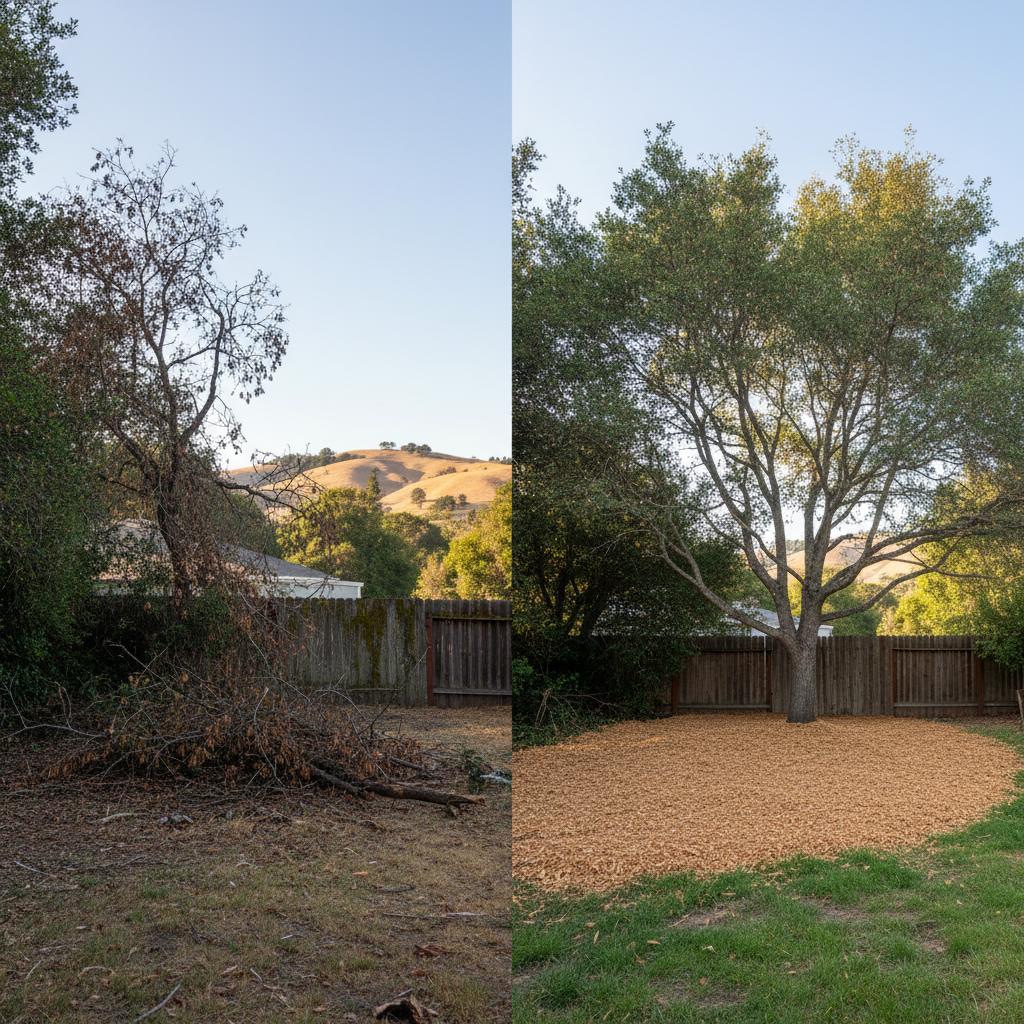
Property owners in Oakland, CA often look up at a giant coast live oak in their yard and realize the tree is starting to block out the afternoon sun. Other times, a property owner is worried that a heavy winter gust will take a massive limb right down through the roof. Property owners usually end up choosing between two main options when they call Oakland Tree Service out for a quote: Crown Thinning or Crown Reduction. These services sound similar, but they do entirely different things to a tree's health, your view, and your wallet.
Oakland Tree Service will break down what these two approaches actually mean, how they stack up against each other, and what makes the most sense for the local East Bay climate.
Crown Thinning: Opening Up the Canopy
Crown Thinning is all about the selective removal of branches, mostly focusing on the outer edge of the canopy. Oakland Tree Service does not change the overall size or shape of the tree during Crown Thinning. Instead, our team takes out crossing branches, dead wood, and a percentage of live growth to let wind flow through more freely and sunlight filter down to your lawn.
Here is what you get with Crown Thinning:
- Better wind resistance because air passes right through instead of catching like a sail
- More dappled light hitting your grass and shade-loving garden beds
- A natural look where neighbors will not even be able to tell you just had work done
The downside? Crown Thinning does not solve clearance issues over your driveway or utility lines. If a branch is hanging too low over your garage in the Montclair hills, Crown Thinning will not fix it.
Crown Reduction: Shrinking the Footprint
Crown Reduction is a more intensive technique. Oakland Tree Service cuts back the overall height or spread of the tree by shortening limbs back to lateral branches that are large enough to take over the terminal growth. This approach handles larger problems.
Property owners usually want Crown Reduction when a tree has outgrown its space. A tree might be pushing against power lines on a narrow Oakland street, or blocking a second-story view of the bay. Costs run higher for Crown Reduction because it requires precise cuts on larger wood, and the labor is intensive. Plus, you will see a starker change in appearance right after the crew packs up.
Cost, Durability, and Maintenance Face-Off
When you are weighing the price tag, Crown Thinning is usually cheaper upfront. Crown Thinning takes less time and produces less heavy debris to haul away. Crown Reduction requires more technical skill to avoid damaging the tree, which means paying for genuine expertise.
As for durability, Oakland's dry summers and sudden winter storms put mature trees under stress. Crown Thinning helps prevent wind-throw in places like the Berkeley hills where gusts really whip through the canyons. Crown Reduction reduces the leverage on heavy limbs, which keeps structurally compromised trees from splitting during heavy atmospheric rivers.
Maintenance cycles depend heavily on what you choose. Crown Thinning might need to be repeated every three to 5 years depending on the species. Crown Reduction can buy you more time, but if you prune too aggressively, the tree will grow weak, vertical water sprouts that require even more upkeep down the road.
For homes and businesses in Oakland, Oakland Tree Service provides Crown Thinning and Crown Reduction services.
Which One Should You Choose?
If your tree is healthy, structurally sound, and just getting a bit too dense, stick with Crown Thinning. Crown Thinning keeps the tree strong without shocking its system. If you are dealing with safety hazards, severe crowding against structures, or a tree that simply got too big for a tiny urban lot, Crown Reduction is the right choice.
Oakland Tree Service sees plenty of yards where homeowners guess wrong and end up damaging their trees with improper cuts. If you are not sure which path fits your property, give our team a call. Oakland Tree Service will take a look at your specific trees and give you an honest recommendation that will protect your property.